When someone types your name into Google, autocomplete can tell a story before they even hit search. If that story includes words like “lawsuit,” “arrest,” or “court case,” your reputation can take a fast hit.
Google autocomplete pulls from what people search most often. So even one viral article or trending topic can tie your name to something you’d rather leave behind. Here’s how to handle court records that show up in autocomplete and take back control of your online image.
Dig Deeper: How to Remove Court Records from Google Search
Why Google Autocomplete Is a Big Deal
Autocomplete suggestions shape first impressions. A negative term linked to your name or business can:
- Damage trust with potential employers, clients, or partners
- Drive people to click on harmful links
- Spread outdated or irrelevant court records
Even worse, once a negative term sticks in autocomplete, it can feel impossible to shake.
Step 1: Report Harmful Autocomplete Predictions to Google
If a court-related term appears next to your name, start by reporting it:
- Begin typing your name into Google search
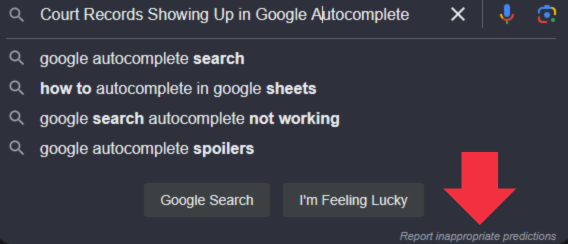
- At the bottom of the autocomplete box, click “Report inappropriate predictions”
- Select a reason and explain how the suggestion is misleading, harmful, or breaks policy
Google won’t remove every suggestion. But if it breaks their rules (like unfairly suggesting sensitive legal issues), there’s a real chance they’ll take it down.
Step 2: Suppress the Term with SEO-Based Search Activity
If removal doesn’t work, suppression is the next best option. Autocomplete suggestions are based on real searches. So you can shape what appears by getting more searches for positive terms.
Example: Instead of “John Smith lawsuit,” aim for people to search “John Smith entrepreneur” or “John Smith speaking event.”
Ways to drive positive search signals:
- Ask friends, colleagues, or contractors to search positive keyword combinations
- Create pages and blog posts that match those phrases
- Share those pages on social media and encourage clicks
- Run low-cost paid traffic to search those terms and land on your content
Over time, this trains Google to see new terms as more relevant.
Step 3: Build Authoritative Content Around New Phrases
To make your positive keywords stick, you need content that supports them. That means:
- Publishing articles and press releases with your name + positive terms
- Creating a personal website or portfolio site using those keywords
- Updating social profiles and bios to reflect the new narrative
Consistency matters. The more Google sees these terms tied to your name, the more likely they are to appear in autocomplete.
Step 4: Work with a Reputation Management Partner
If you’re dealing with sensitive or stubborn autocomplete terms tied to court records, it’s often worth getting help. A reputation management service like Top Shelf Reputation can:
- Monitor autocomplete changes
- Run ongoing suppression campaigns
- Build high-authority content to shift Google’s algorithm
Final Thoughts
Autocomplete is fast and public, but it can be changed. Report harmful suggestions. Promote new keywords. Build content that tells your story. These steps can push court-related terms out of Google’s spotlight.
Need help? At Top Shelf Reputation, we remove harmful autocomplete suggestions and clean up search results.
Let’s reshape what people see when they search your name.
Last updated on July 26, 2026